BEGIN:VCALENDAR
VERSION:2.0
PRODID:-//jEvents 2.0 for Joomla//EN
CALSCALE:GREGORIAN
METHOD:PUBLISH
BEGIN:VTIMEZONE
TZID:Australia/Sydney
BEGIN:STANDARD
DTSTART:20220906T193000
RDATE:20221002T030000
TZOFFSETFROM:+1100
TZOFFSETTO:+1000
TZNAME:Australia/Sydney AEST
END:STANDARD
BEGIN:STANDARD
DTSTART:20230402T020000
RDATE:20231001T030000
TZOFFSETFROM:+1100
TZOFFSETTO:+1000
TZNAME:Australia/Sydney AEST
END:STANDARD
BEGIN:STANDARD
DTSTART:20240407T020000
RDATE:20241006T030000
TZOFFSETFROM:+1100
TZOFFSETTO:+1000
TZNAME:Australia/Sydney AEST
END:STANDARD
BEGIN:STANDARD
DTSTART:20250406T020000
RDATE:20251005T030000
TZOFFSETFROM:+1100
TZOFFSETTO:+1000
TZNAME:Australia/Sydney AEST
END:STANDARD
BEGIN:STANDARD
DTSTART:20260405T020000
RDATE:20261004T030000
TZOFFSETFROM:+1100
TZOFFSETTO:+1000
TZNAME:Australia/Sydney AEST
END:STANDARD
BEGIN:STANDARD
DTSTART:20270404T020000
RDATE:20271003T030000
TZOFFSETFROM:+1100
TZOFFSETTO:+1000
TZNAME:Australia/Sydney AEST
END:STANDARD
BEGIN:STANDARD
DTSTART:20280402T020000
RDATE:20281001T030000
TZOFFSETFROM:+1100
TZOFFSETTO:+1000
TZNAME:Australia/Sydney AEST
END:STANDARD
BEGIN:DAYLIGHT
DTSTART:20221002T030000
RDATE:20230402T020000
TZOFFSETFROM:+1000
TZOFFSETTO:+1100
TZNAME:Australia/Sydney AEDT
END:DAYLIGHT
BEGIN:DAYLIGHT
DTSTART:20231001T030000
RDATE:20240407T020000
TZOFFSETFROM:+1000
TZOFFSETTO:+1100
TZNAME:Australia/Sydney AEDT
END:DAYLIGHT
BEGIN:DAYLIGHT
DTSTART:20241006T030000
RDATE:20250406T020000
TZOFFSETFROM:+1000
TZOFFSETTO:+1100
TZNAME:Australia/Sydney AEDT
END:DAYLIGHT
BEGIN:DAYLIGHT
DTSTART:20251005T030000
RDATE:20260405T020000
TZOFFSETFROM:+1000
TZOFFSETTO:+1100
TZNAME:Australia/Sydney AEDT
END:DAYLIGHT
BEGIN:DAYLIGHT
DTSTART:20261004T030000
RDATE:20270404T020000
TZOFFSETFROM:+1000
TZOFFSETTO:+1100
TZNAME:Australia/Sydney AEDT
END:DAYLIGHT
BEGIN:DAYLIGHT
DTSTART:20271003T030000
RDATE:20280402T020000
TZOFFSETFROM:+1000
TZOFFSETTO:+1100
TZNAME:Australia/Sydney AEDT
END:DAYLIGHT
BEGIN:DAYLIGHT
DTSTART:20281001T030000
RDATE:20290401T020000
TZOFFSETFROM:+1000
TZOFFSETTO:+1100
TZNAME:Australia/Sydney AEDT
END:DAYLIGHT
END:VTIMEZONE
BEGIN:VEVENT
UID:13dc54dd2cfb24b50809d5681f7b8c39
CATEGORIES:Guest Speaker Night
CREATED:20230407T114402
SUMMARY:Guest Speaker - Peter Nosworthy (WSAAG)
LOCATION:: Zoom Online
DESCRIPTION:Stellar OccultationsObserving occultations of stars by solar system objects
such as asteroids, dwarf planets and planetary moons, is a powerful method
for measuring the sizes and shapes of these objects, refining our knowledg
e of their orbits, and detecting previously unknown objects in their vicini
ty such as rings and satellites. Using this technique, coordinated teams of
amateur observers can achieve results surpassing professional observatorie
s and even space based telescopes. It is a field in which amateurs can make
real contributions to science using only fairly basic equipment and some f
ree software tools. This has led to many collaborations between amateur and
professional astronomers. I will also describe how a colleague and I were
able to discover two asteroid moons using the occultation method, and how n
ew observers can get involved in the field.\n \nPeter NosworthyPeter has a
background in electronics and IT and has worked in the field of medical ele
ctronics (heart pacemakers and cochlear implants) and also as a software en
gineer in consumer electronics, stock market, and financial systems. He hol
ds a Bachelor of Applied Science (Computing) from UTS and an Electronics En
gineering Certificate from TAFE.\nPeter has been an amateur astronomer sinc
e the age of 12 and served as secretary and vice president of Northern Sydn
ey Astronomical Society (NSAS) before moving from Sydney to the darker skie
s of the Blue Mountains in 2012. After joining the Western Sydney Amateur A
stronomy Group (https://www.wsaag.org/) (WSAAG), where there was an active
group of occultation observers, he became interested in stellar occultation
s and built an observatory (Hazelbrook Observatory (http://hazelbrookobserv
atory.com/)) in his back yard in 2019. He has served on the committee of WS
AAG since 2016 and as president since 2022.\n
X-ALT-DESC;FMTTYPE=text/html:Stellar Occultations
Observing occultations of stars by solar sy
stem objects such as asteroids, dwarf planets and planetary moons, is a pow
erful method for measuring the sizes and shapes of these objects, refining
our knowledge of their orbits, and detecting previously unknown objects in
their vicinity such as rings and satellites. Using this technique, coordina
ted teams of amateur observers can achieve results surpassing professional
observatories and even space based telescopes. It is a field in which amate
urs can make real contributions to science using only fairly basic equipmen
t and some free software tools. This has led to many collaborations between
amateur and professional astronomers. I will also describe how a colleague
and I were able to discover two asteroid moons using the occultation metho
d, and how new observers can get involved in the field.
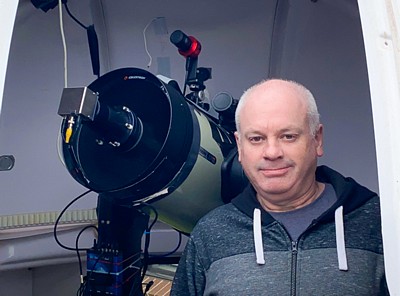 Peter Nosworthy
Peter has a backg
round in electronics and IT and has worked in the field of medical electron
ics (heart pacemakers and cochlear implants) and also as a software enginee
r in consumer electronics, stock market, and financial systems. He holds a
Bachelor of Applied Science (Computing) from UTS and an Electronics Enginee
ring Certificate from TAFE.
Peter has been an amateur astronomer sinc
e the age of 12 and served as secretary and vice president of Northern Sydn
ey Astronomical Society (NSAS) before moving from Sydney to the darker skie
s of the Blue Mountains in 2012. After joining the Western Sydney Amateur Astronomy Group
(WSAAG), where there was an active group of occultation observers
, he became interested in stellar occultations and built an observatory (Hazelbrook Observatory) in his back yard in 2019. He has served o
n the committee of WSAAG since 2016 and as president since 2022.
DTSTAMP:20261015T032928
DTSTART;TZID=Australia/Sydney:20230907T193000
DTEND;TZID=Australia/Sydney:20230907T213000
SEQUENCE:0
TRANSP:OPAQUE
END:VEVENT
END:VCALENDAR