
Although galaxies have be en known since the time of Messier, no-one knew what they were until the 19 20s. The essential information was in by 1915 and was understood by a few experts, but most of the scientific community was diverted for a decade by misinformation.
I am interested in the broader question: why do some discoveries, which appear in hindsight to be obviously major discoveries, h ave so little impact when they were made. This question comes up many times in the history of astronomy: famous examples include the nature of galaxie s and the discovery of the expanding universe. Often, the credit for the di scovery does not go to the right person.
This talk will cover some of these historical discoveries. I am interested in dark matter in the univer se, so part of the talk will be on what we know about dark matter and how i t was discovered. Again, the critical information was available many years before the community was able to understand the implications.
is D uffield Professor of Astronomy at the Australian National University (Resea rch School of Astronomy & Astrophysics, Mount Stromlo Observatory) in Canbe rra. He studied mathematics at UWA and theoretical astrophysics at the Univ ersity of Cambridge, followed by a postdoctoral year at McDonald Observator y (University of Texas) with G. de Vaucouleurs and a year as a fellow of Tr inity College, Cambridge. He returned to Australia in 1967 as a Queen Eliza beth II Fellow at Mt Stromlo Observatory, and has been there ever since.
His research interests are in the formation and dynamics of galaxies an d globular clusters, and particularly in the problem of dark matter in gala xies: he was one of the first to point out (1970) that spiral galaxies cont ain a large fraction of dark matter. More recently, he co-founded a new fie ld of astronomy called Galactic Archaeology.
For his current research , he uses the optical and radio telescopes in Australia, and also observes with large optical telescopes in Spain, Chile, and Hawaii. He has written a bout 400 refereed research articles.
He was a Distinguished Visiting
Scientist at the Space Telescope Science Institute in Baltimore for many ye
ars. He won the Dannie Heineman prize of the American Institute of Physics
and the American Astronomical Society for 1999. In 2001, he was named by IS
I as one of Australia's 35 most highly cited scientists. He won the Prime M
inister's Prize for Science in 2012, the Matthew Flinders Medal of the Aust
ralian Academy of Science in 2013,
and was the Henry Norris Russell L
ecturer (the American Astronomical Society's top prize) in 2013. In 2014 he
won the international Gruber Prize for Cosmology.
He became a Fellow of the Australian Academy of Science (FAA) in 1981 and a Fellow of the Roy al Society of London (FRS) in 1998. He serves on visiting committees and ad visory boards for several major astronomical institutions around the world.
(Photo Credit: Emily Moylan)
X-ALT-DESC;FMTTYPE=text/html:Although galaxies have be en known since the time of Messier, no-one knew what they were until the 19 20s. The essential information was in by 1915 and was understood by a few experts, but most of the scientific community was diverted for a decade by misinformation.
I am interested in the broader question: why do some discoveries, which appear in hindsight to be obviously major discoveries, h ave so little impact when they were made. This question comes up many times in the history of astronomy: famous examples include the nature of galaxie s and the discovery of the expanding universe. Often, the credit for the di scovery does not go to the right person.
This talk will cover some of these historical discoveries. I am interested in dark matter in the univer se, so part of the talk will be on what we know about dark matter and how i t was discovered. Again, the critical information was available many years before the community was able to understand the implications.
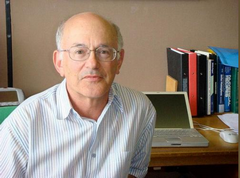
is Duffield Professor of Astronomy at the Australian Nation al University (Research School of Astronomy & Astrophysics, Mount Stromlo O bservatory) in Canberra. He studied mathematics at UWA and theoretical astr ophysics at the University of Cambridge, followed by a postdoctoral year at McDonald Observatory (University of Texas) with G. de Vaucouleurs and a ye ar as a fellow of Trinity College, Cambridge. He returned to Australia in 1 967 as a Queen Elizabeth II Fellow at Mt Stromlo Observatory, and has been there ever since.
His research interests are in the formation and dyn amics of galaxies and globular clusters, and particularly in the problem of dark matter in galaxies: he was one of the first to point out (1970) that spiral galaxies contain a large fraction of dark matter. More recently, he co-founded a new field of astronomy called Galactic Archaeology.
For his current research, he uses the optical and radio telescopes in Australia , and also observes with large optical telescopes in Spain, Chile, and Hawa ii. He has written about 400 refereed research articles.
He was a Dis
tinguished Visiting Scientist at the Space Telescope Science Institute in B
altimore for many years. He won the Dannie Heineman prize of the American I
nstitute of Physics and the American Astronomical Society for 1999. In 2001
, he was named by ISI as one of Australia's 35 most highly cited scientists
. He won the Prime Minister's Prize for Science in 2012, the Matthew Flinde
rs Medal of the Australian Academy of Science in 2013,
and was the He
nry Norris Russell Lecturer (the American Astronomical Society's top prize)
in 2013. In 2014 he won the international Gruber Prize for Cosmology.
(Photo Credit: Emily Moylan)
DTSTAMP:20261026T074523 DTSTART;TZID=Australia/Sydney:20161110T193000 DTEND;TZID=Australia/Sydney:20161110T213000 SEQUENCE:0 TRANSP:OPAQUE END:VEVENT END:VCALENDAR