BEGIN:VCALENDAR
VERSION:2.0
PRODID:-//jEvents 2.0 for Joomla//EN
CALSCALE:GREGORIAN
METHOD:PUBLISH
BEGIN:VTIMEZONE
TZID:Australia/Sydney
BEGIN:STANDARD
DTSTART:20200405T020000
RDATE:20201004T030000
TZOFFSETFROM:+1100
TZOFFSETTO:+1000
TZNAME:Australia/Sydney AEST
END:STANDARD
BEGIN:STANDARD
DTSTART:20210404T020000
RDATE:20211003T030000
TZOFFSETFROM:+1100
TZOFFSETTO:+1000
TZNAME:Australia/Sydney AEST
END:STANDARD
BEGIN:STANDARD
DTSTART:20220403T020000
RDATE:20221002T030000
TZOFFSETFROM:+1100
TZOFFSETTO:+1000
TZNAME:Australia/Sydney AEST
END:STANDARD
BEGIN:STANDARD
DTSTART:20230402T020000
RDATE:20231001T030000
TZOFFSETFROM:+1100
TZOFFSETTO:+1000
TZNAME:Australia/Sydney AEST
END:STANDARD
BEGIN:STANDARD
DTSTART:20240407T020000
RDATE:20241006T030000
TZOFFSETFROM:+1100
TZOFFSETTO:+1000
TZNAME:Australia/Sydney AEST
END:STANDARD
BEGIN:STANDARD
DTSTART:20250406T020000
RDATE:20251005T030000
TZOFFSETFROM:+1100
TZOFFSETTO:+1000
TZNAME:Australia/Sydney AEST
END:STANDARD
BEGIN:STANDARD
DTSTART:20260405T020000
RDATE:20261004T030000
TZOFFSETFROM:+1100
TZOFFSETTO:+1000
TZNAME:Australia/Sydney AEST
END:STANDARD
BEGIN:STANDARD
DTSTART:20270404T020000
RDATE:20271003T030000
TZOFFSETFROM:+1100
TZOFFSETTO:+1000
TZNAME:Australia/Sydney AEST
END:STANDARD
BEGIN:STANDARD
DTSTART:20280402T020000
RDATE:20281001T030000
TZOFFSETFROM:+1100
TZOFFSETTO:+1000
TZNAME:Australia/Sydney AEST
END:STANDARD
BEGIN:DAYLIGHT
DTSTART:20200331T193000
RDATE:20200405T020000
TZOFFSETFROM:+1000
TZOFFSETTO:+1100
TZNAME:Australia/Sydney AEDT
END:DAYLIGHT
BEGIN:DAYLIGHT
DTSTART:20201004T030000
RDATE:20210404T020000
TZOFFSETFROM:+1000
TZOFFSETTO:+1100
TZNAME:Australia/Sydney AEDT
END:DAYLIGHT
BEGIN:DAYLIGHT
DTSTART:20211003T030000
RDATE:20220403T020000
TZOFFSETFROM:+1000
TZOFFSETTO:+1100
TZNAME:Australia/Sydney AEDT
END:DAYLIGHT
BEGIN:DAYLIGHT
DTSTART:20221002T030000
RDATE:20230402T020000
TZOFFSETFROM:+1000
TZOFFSETTO:+1100
TZNAME:Australia/Sydney AEDT
END:DAYLIGHT
BEGIN:DAYLIGHT
DTSTART:20231001T030000
RDATE:20240407T020000
TZOFFSETFROM:+1000
TZOFFSETTO:+1100
TZNAME:Australia/Sydney AEDT
END:DAYLIGHT
BEGIN:DAYLIGHT
DTSTART:20241006T030000
RDATE:20250406T020000
TZOFFSETFROM:+1000
TZOFFSETTO:+1100
TZNAME:Australia/Sydney AEDT
END:DAYLIGHT
BEGIN:DAYLIGHT
DTSTART:20251005T030000
RDATE:20260405T020000
TZOFFSETFROM:+1000
TZOFFSETTO:+1100
TZNAME:Australia/Sydney AEDT
END:DAYLIGHT
BEGIN:DAYLIGHT
DTSTART:20261004T030000
RDATE:20270404T020000
TZOFFSETFROM:+1000
TZOFFSETTO:+1100
TZNAME:Australia/Sydney AEDT
END:DAYLIGHT
BEGIN:DAYLIGHT
DTSTART:20271003T030000
RDATE:20280402T020000
TZOFFSETFROM:+1000
TZOFFSETTO:+1100
TZNAME:Australia/Sydney AEDT
END:DAYLIGHT
BEGIN:DAYLIGHT
DTSTART:20281001T030000
RDATE:20290401T020000
TZOFFSETFROM:+1000
TZOFFSETTO:+1100
TZNAME:Australia/Sydney AEDT
END:DAYLIGHT
END:VTIMEZONE
BEGIN:VEVENT
UID:c07c959e56b25d8e19a1c65b56cfa3a9
CATEGORIES:Guest Speaker Night
CREATED:20210329T213443
SUMMARY:Guest Speaker - Dr Ian Kemp (ICRAR)
LOCATION:Zoom Meeting - members will be invited
DESCRIPTION:Space rocks and chaotic orbits: could Earth have a hidden companion?Nothing
could be more boring than a rock going round in orbit for millions of year
s, right? Well as usual, Ian begs to differ, and will take you on a quick t
our of some of the features of orbits that you may not have come across bef
ore.\nThe elliptical orbit under the influence of gravity was solved theore
tically by Isaac Newton in the 1600s, and his equations are usually used to
day, to calculate orbits of planets, moons, comets, near-Earth asteroids, a
nd spacecraft. There are only two slight problems - firstly, the equations
cannot actually be solved if there are more than two bodies involved (which
is usually the case, eg. Earth-Moon-Spacecraft); and secondly the equation
s are actually incorrect anyway because they don't include time dilation du
e to velocity and gravity. The only way to understand orbits long term is t
o use supercomputer modelling.\n \nIn this talk we will quickly run through
some of the consequences of the 'three body problem' and the limitations o
f Newton's model of gravity. Orbit swaps, drastic variations in Earth's orb
it round the Sun, and the underlying chaotic nature of orbits in general. T
he fact that all orbits are inherently unstable opens up an interesting que
stion.... could another body share Earth's orbit? If so, how could it get t
here? And if not, why not? Ian will outline some original research into whe
ther there might be something very interesting lurking at one of the Earth-
Sun Lagrange points.\n \nAs a finale we will look at orbits in the framewor
k of general relativity - and find out if this makes things easier, or hard
er to understand.\nDr Ian KempAstonomer at ICRAR - International Centre for
Radio Astronomy ResearchI started my working life in the UK steel industry
. After gaining a 1st class honours degree and PhD in Metallurgy at the Uni
versity of Leeds, I pursued an academic career initially at the University
of Wales, then at the BHP Melbourne Research Laboratories in Melbourne, Vic
toria. During this period I achieved a number of Journal publications and C
onference Presentations in the field. I later moved into more applied work
in Steel Processing, Data Management and Technology Deployment, in industri
es including Steel manufacture, government, and Oil & Gas. The latter i
ncluded two years in the Pilbara (NW Australia) managing a range of process
improvement projects. In my later career my focus was on Project Managemen
t though I maintained a technical focus and was awarded a patent relevant t
o reducing the environmental impact of offshore operations.\nThrough all th
is time I maintained an interest in astronomy, and gained a Graduate Diplom
a and Masters Degree in Astronomy from Swinburne University (Victoria) by d
istance learning.\nI recently joined ICRAR as a full time researcher after
many years as an enthusiastic amateur astronomer. I am pursuing a number of
smaller projects as I discover where my main research interests lie. A cou
ple of my research areas are extensions to short projects carried out for m
y Masters Degree in Astronomy.\nDATA INTENSIVE ASTRONOMY\nDeveloping standa
rdised data flows to process the large flow of data from the new FAST radio
astronomy dish in Southwest China.\nCATACLYSMIC VARIABLE STARS\nI am study
ing a type of variable star known as UGSU, which consists of a binary syste
m in which a medium-sized red star orbits a more massive white dwarf. These
are the precursor systems to the ‘type 1a supernovae’, which are very impo
rtant phenomena in Astronomy In these systems the red companion spills matt
er onto the white dwarf, creating an accretion disk. From time to time the
disk becomes gravitationally unstable and collapsed onto the WD, causing th
e system to brighten by a factor of 10,000 or so. By studying the light emi
tted during this collapse we can learn about the behaviour and possible ult
imate destruction of the system.\nEARTH’S TROJAN POINTS\nIt is possible for
asteroids, rocks, and dust to share Earth’s orbit, if they can become boun
d to one of the ‘Lagrange Points’ which sit ahead of and behind Earth in it
s orbit. My work based on dynamical modelling using the Swinburne supercomp
uter has established the criteria for large objects to maintain a stable ‘t
adpole’ or ‘horseshoe’ orbit as a partner of Earth. I am extending this wor
k to look at the possibility of primordial gas and dust being retained – fo
r these small particles the models need to include the effects of radiation
pressure and light drag.\nEVOLUTION OF ‘GREEN VALLEY’ GALAXIES\nI am inves
tigating the evolution of galaxies as they transition from the blue cloud t
o the red sequence (if in fact they do transition!) – specifically looking
for correlations with the gas content of the galaxies. This work is under t
he direction of Ivy Wong and Barbara Catinella at ICRAR.\n
X-ALT-DESC;FMTTYPE=text/html:Space rocks and chaotic orbits: could Earth have a hidden companion?
Nothing could be more boring than a rock going round in orbit for mill
ions of years, right? Well as usual, Ian begs to differ, and will take you
on a quick tour of some of the features of orbits that you may not have com
e across before.
The elliptical orbit under the influence of gravity
was solved theoretically by Isaac Newton in the 1600s, and his equations ar
e usually used today, to calculate orbits of planets, moons, comets, near-E
arth asteroids, and spacecraft. There are only two slight problems - firstl
y, the equations cannot actually be solved if there are more than two bodie
s involved (which is usually the case, eg. Earth-Moon-Spacecraft); and seco
ndly the equations are actually incorrect anyway because they don't include
time dilation due to velocity and gravity. The only way to understand orbi
ts long term is to use supercomputer modelling.
In this talk we
will quickly run through some of the consequences of the 'three body probl
em' and the limitations of Newton's model of gravity. Orbit swaps, drastic
variations in Earth's orbit round the Sun, and the underlying chaotic natur
e of orbits in general. The fact that all orbits are inherently unstable op
ens up an interesting question.... could another body share Earth's orbit?
If so, how could it get there? And if not, why not? Ian will outline some o
riginal research into whether there might be something very interesting lur
king at one of the Earth-Sun Lagrange points.
As a finale we wi
ll look at orbits in the framework of general relativity - and find out if
this makes things easier, or harder to understand.
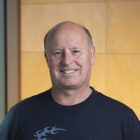 Dr Ian Kemp
Astonomer at ICRAR - Int
ernational Centre for Radio Astronomy Research
I started my working
life in the UK steel industry. After gaining a 1st class honours degree and
PhD in Metallurgy at the University of Leeds, I pursued an academic career
initially at the University of Wales, then at the BHP Melbourne Research L
aboratories in Melbourne, Victoria. During this period I achieved a number
of Journal publications and Conference Presentations in the field. I later
moved into more applied work in Steel Processing, Data Management and Techn
ology Deployment, in industries including Steel manufacture, government, an
d Oil & Gas. The latter included two years in the Pilbara (NW Australia
) managing a range of process improvement projects. In my later career my f
ocus was on Project Management though I maintained a technical focus and wa
s awarded a patent relevant to reducing the environmental impact of offshor
e operations.
Through all this time I maintained an interest in astro
nomy, and gained a Graduate Diploma and Masters Degree in Astronomy from Sw
inburne University (Victoria) by distance learning.
I recently joined
ICRAR as a full time researcher after many years as an enthusiastic amateu
r astronomer. I am pursuing a number of smaller projects as I discover wher
e my main research interests lie. A couple of my research areas are extensi
ons to short projects carried out for my Masters Degree in Astronomy.
DATA INTENSIVE ASTRONOMY
Developing standardised data flows to proces
s the large flow of data from the new FAST radio astronomy dish in Southwes
t China.
CATACLYSMIC VARIABLE STARS
I am studying a type of vari
able star known as UGSU, which consists of a binary system in which a mediu
m-sized red star orbits a more massive white dwarf. These are the precursor
systems to the ‘type 1a supernovae’, which are very important
phenomena in Astronomy In these systems the red companion spills matter ont
o the white dwarf, creating an accretion disk. From time to time the disk b
ecomes gravitationally unstable and collapsed onto the WD, causing the syst
em to brighten by a factor of 10,000 or so. By studying the light emitted d
uring this collapse we can learn about the behaviour and possible ultimate
destruction of the system.
EARTH’S TROJAN POINTS
It is pos
sible for asteroids, rocks, and dust to share Earth’s orbit, if they
can become bound to one of the ‘Lagrange Points’ which sit ahea
d of and behind Earth in its orbit. My work based on dynamical modelling us
ing the Swinburne supercomputer has established the criteria for large obje
cts to maintain a stable ‘tadpole’ or ‘horseshoe’ o
rbit as a partner of Earth. I am extending this work to look at the possibi
lity of primordial gas and dust being retained – for these small part
icles the models need to include the effects of radiation pressure and ligh
t drag.
EVOLUTION OF ‘GREEN VALLEY’ GALAXIES
I am in
vestigating the evolution of galaxies as they transition from the blue clou
d to the red sequence (if in fact they do transition!) – specifically
looking for correlations with the gas content of the galaxies. This work i
s under the direction of Ivy Wong and Barbara Catinella at ICRAR.
DTSTAMP:20261024T203703
DTSTART;TZID=Australia/Sydney:20210401T193000
DTEND;TZID=Australia/Sydney:20210401T213000
SEQUENCE:0
TRANSP:OPAQUE
END:VEVENT
END:VCALENDAR